Darwin in Paradise Camp: Yuki Kihara
Please note that this exhibition has now closed. It took place from 15 March to 3 August 2025.

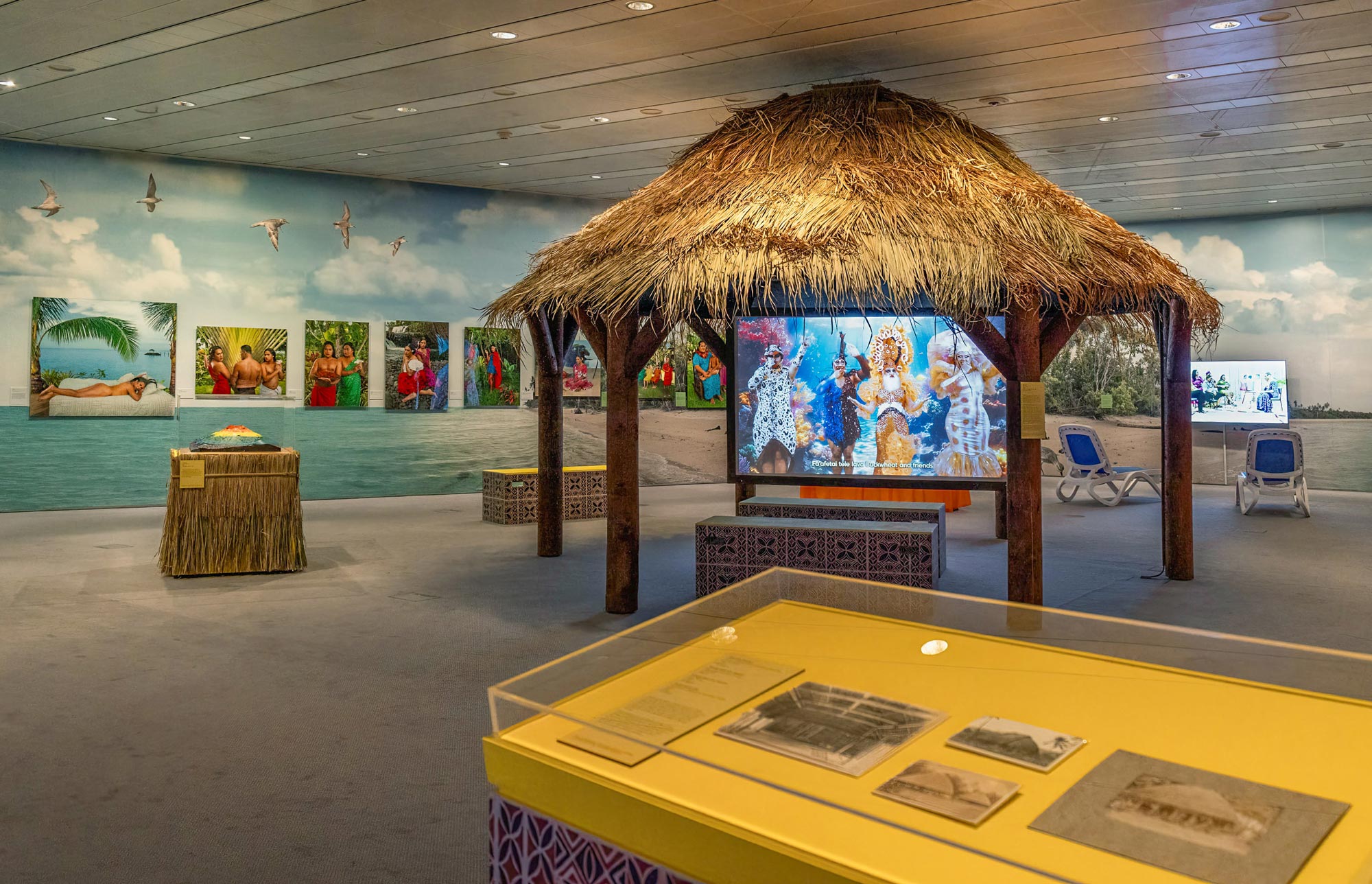
The Sainsbury Centre was proud to host the UK premiere of Paradise Camp, a celebrated work by Yuki Kihara (b.1975), an interdisciplinary artist of Sāmoan and Japanese descent, which was exhibited alongside newly commissioned work titled Darwin Drag.
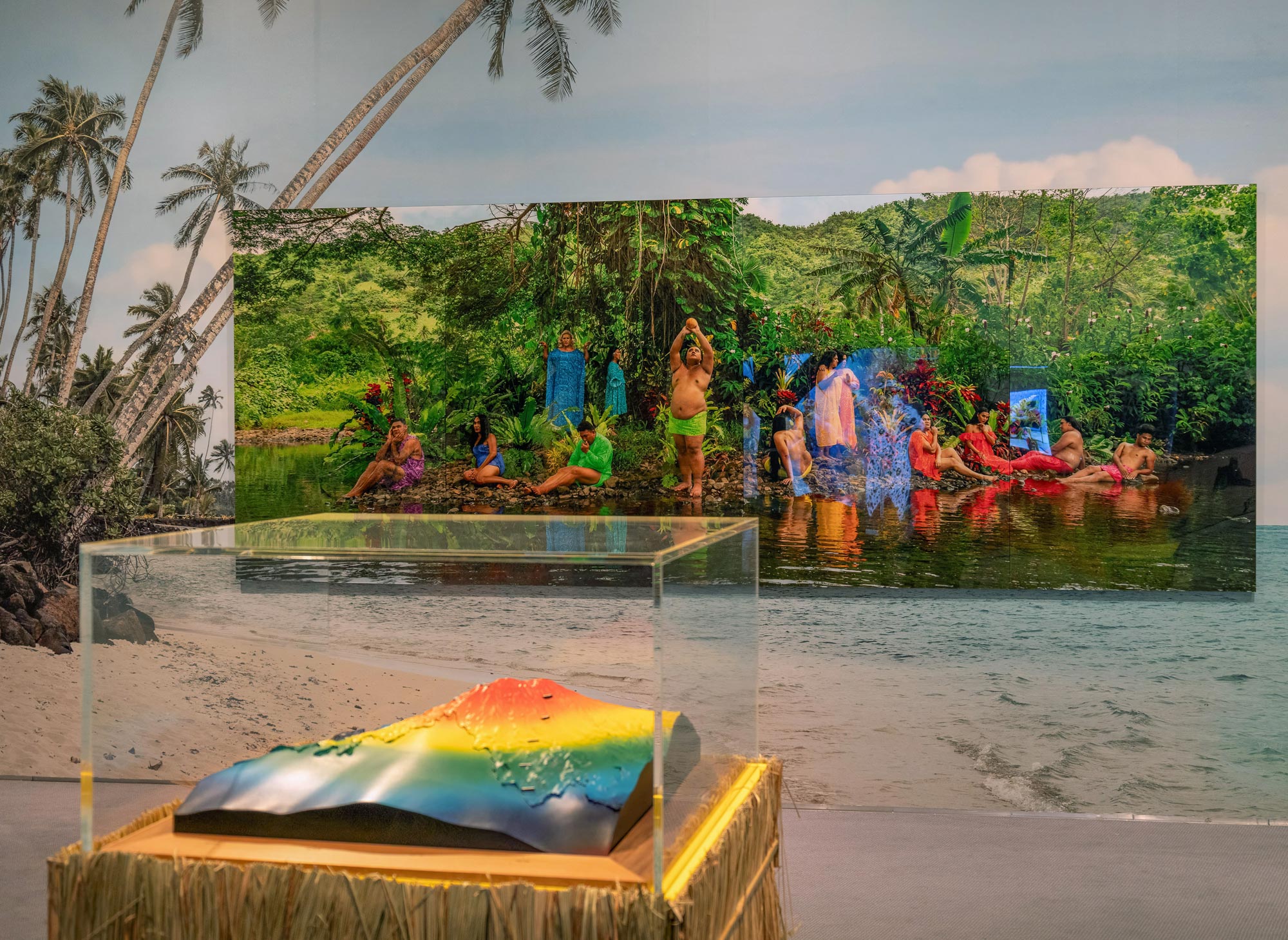
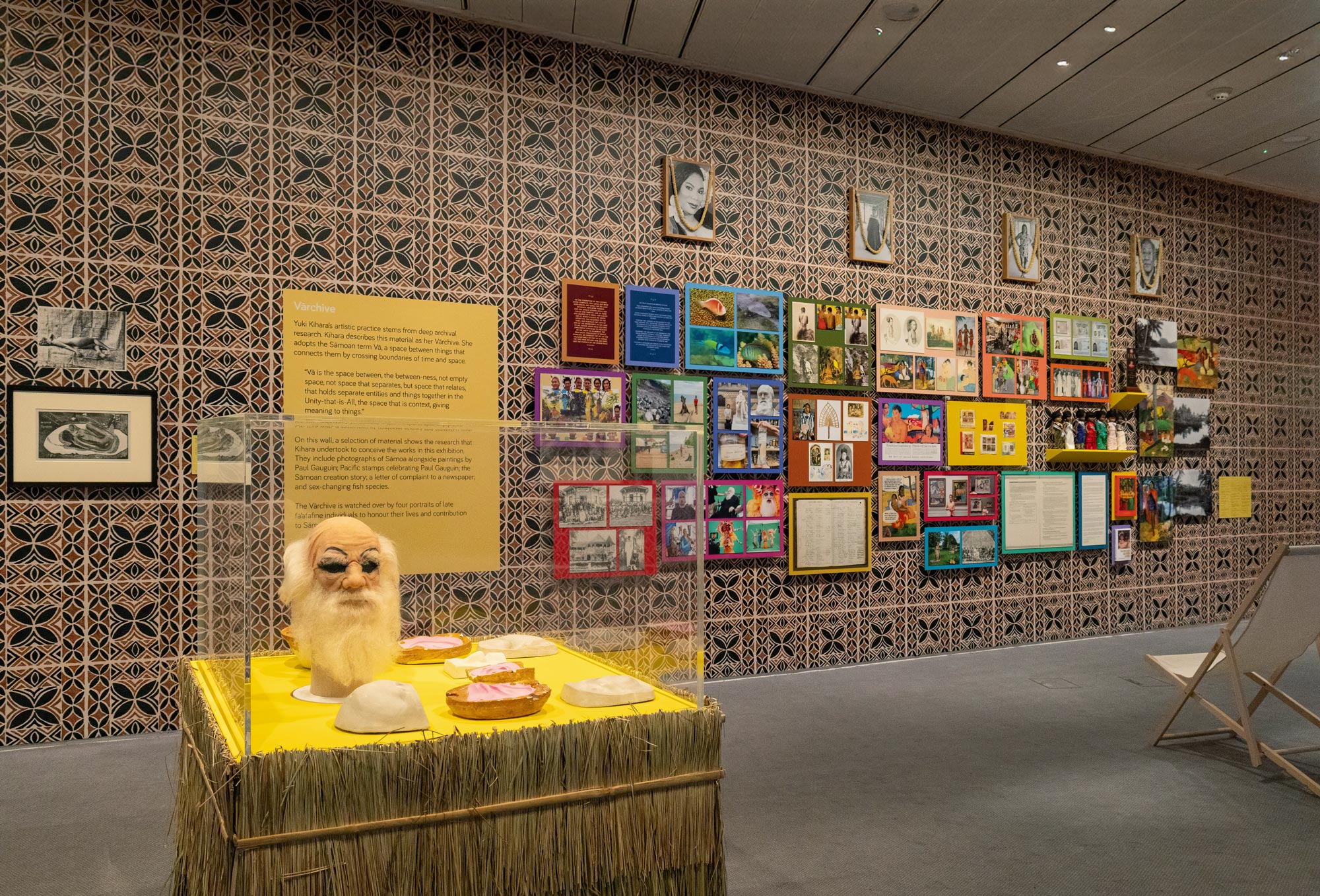
Previously presented at the Aotearoa New Zealand Pavilion in the 59th Venice Biennale in 2022, Paradise Camp upcycles the works of French painter Paul Gauguin (1848–1903). Through archival research, Kihara believes Gauguin’s paintings made during his time in Tahiti and the Marquesas Islands were inspired by colonial photographs taken in Sāmoa.
Kihara recasts past narratives by using Fa’afafine models – a third gender community in Sāmoa, to which Kihara also belongs – in colourful, hyperreal photographs reflecting Gauguin’s compositions. Darwin in Paradise Camp features original works by Gauguin alongside Kihara’s Paradise Camp for the very first time.
Paradise Camp is augmented by Kihara’s ground-breaking new work, Darwin Drag. Following new research by Ross Brooks, Kihara’s project, which reveals how famed evolutionary biologist Charles Darwin (1809–1882), shaped some of his findings and suggested non-heteronormative species and same-sex attraction in animals was rare and unnatural, to conform with the conservative values of the Victorian period.
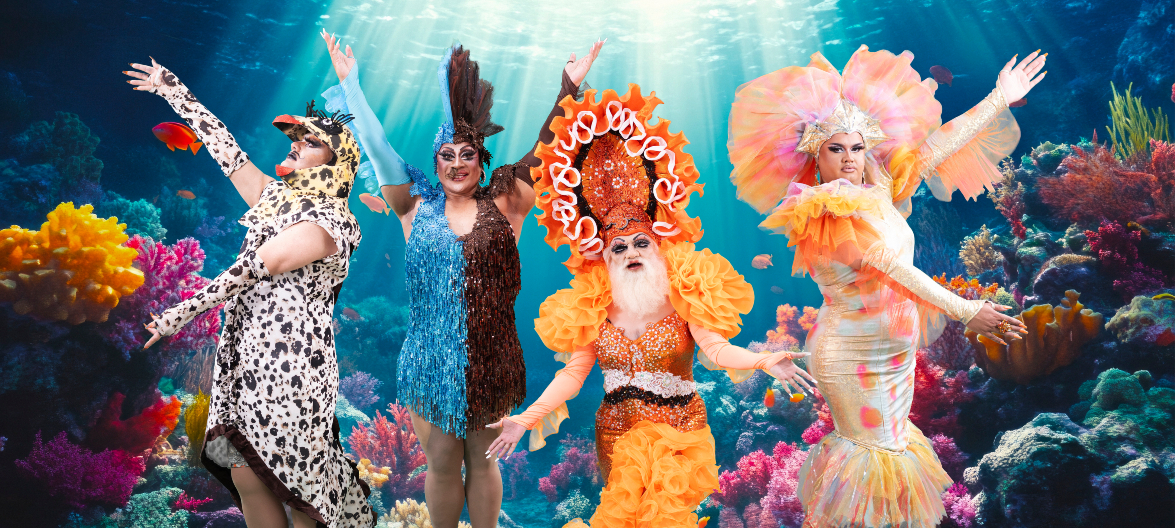
Darwin’s evolutionary theories and queer aesthetics in the animal ‘queendom’ inspired Kihara to create Darwin Drag – a video work featuring Kihara herself prosthetically transformed as Charles Darwin, who confides in a renown Sāmoan drag queen, BUCKWEAT, that he has been unhappy keeping his secret in the closet about queer species for so long.
Darwin Drag introduces the fish species with ‘Fa’afafine traits’ found in the ocean surrounding the Sāmoan archipelago, including clownfish and parrotfish. Darwin Drag is presented alongside corresponding fish specimens, on loan from the Natural History Museum.
Incorporating wallpaper, Kihara’s own works, historical artworks and specimens plus archival material, the exhibition shed new light on figures of the past and celebrated the radical perspective of this important artist of today.
The exhibition foregrounded how a closer relationship between humanity and the seas can save the communities most at risk of the human-caused impact on the seas, as well as the seas themselves.
“(In) the expansive world of the Japanese-Sāmoan artist (Yuki Kihara) …a reconsideration of what it means to be human requires a reevaluation of the origin of the species.”
Art Review, April 2025. Read the full article,Yuki Kihara: Queering Evolution, at Art Review here.
Exhibition supported by British Council and AHRC Impact Acceleration Account administered by UEA.
Artist’s practice supported by Creative New Zealand.


Darwin in Paradise Camp was part of a six-month season of interlinked exhibitions and events that explored the question Can the Seas Survive Us?
Image top: ‘Darwin drag’ (2025) by Yuki Kihara. Courtesy of Yuki Kihara and Milford Galleries, Aotearoa New Zealand.
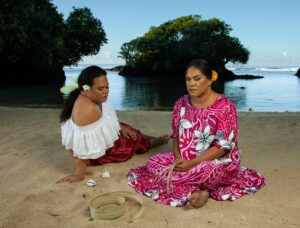
Yuki Kihara, Two Fa’afafine on the Beach (after Gauguin) (2020)